
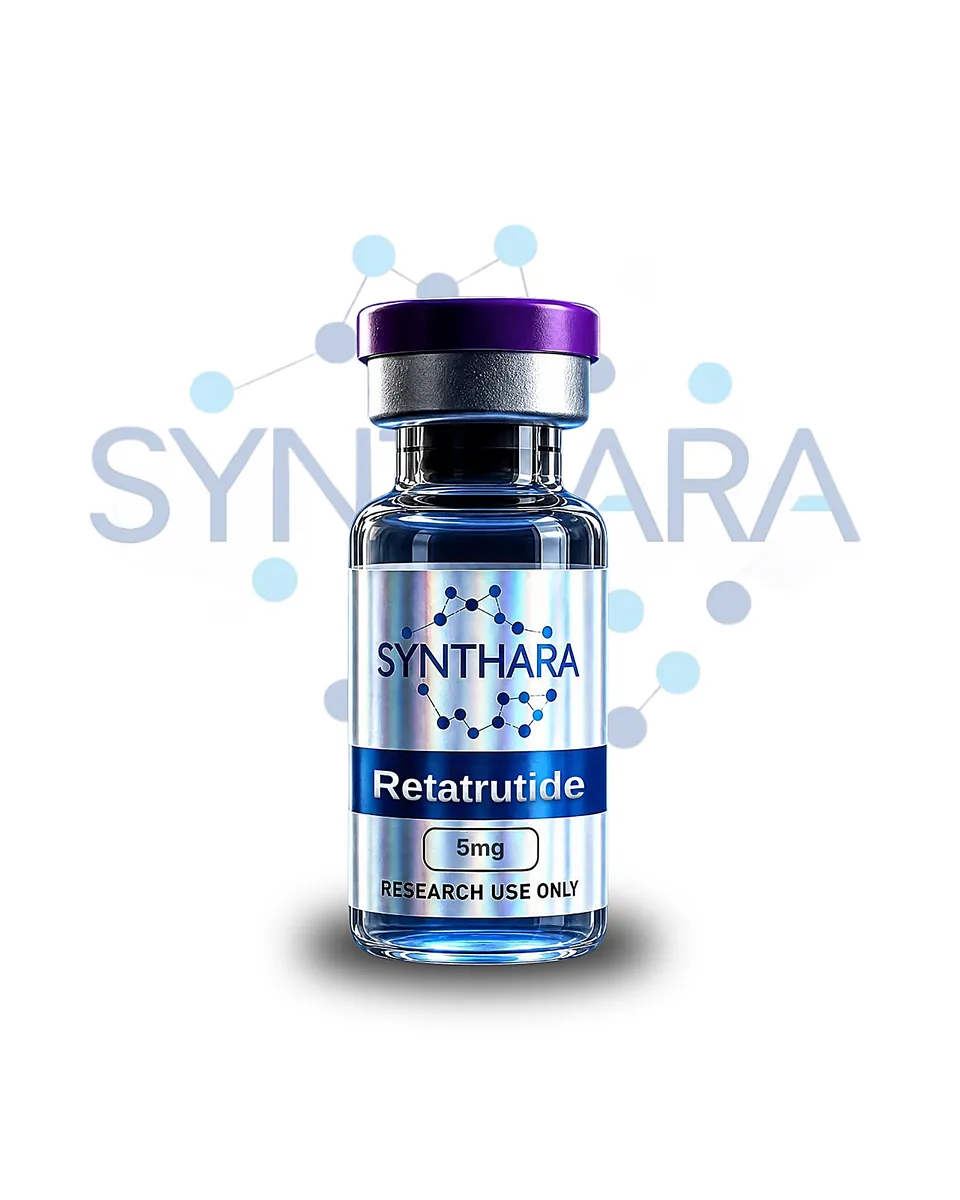


Retatrutide
Retatrutide is an investigational peptide compound that functions as a triple receptor agonist, simultaneously targeting the glucose-dependent insulinotropic polypeptide (GIP) receptor, the glucagon-like peptide-1 (GLP-1) receptor, and the glucagon receptor. Specifically, this tripartite mechanism of action distinguishes Retatrutide from single- or dual-agonist metabolic research peptides by engaging three distinct endocrine pathways in parallel.
Glucagon-like peptide-1 physiological signaling pathways and target organ effects. Source: ttsz / Getty Images
Mechanistically, research into Retatrutide has focused primarily on its potential applications in metabolic regulation, particularly in managing obesity and type 2 diabetes. Because the additive effects of energy expenditure, appetite suppression, and hepatic glucagon activity operate synergistically, studies have investigated how its combined receptor activation yields significantly greater body weight reductions compared to single or dual agonists.
Consequently, preclinical and clinical trials have examined its profound downstream impacts on fasting blood glucose levels, insulin sensitivity, and lipid homeostasis. In addition, researchers are evaluating its influence on hepatic fat fraction reduction and metabolic rate regulation. Furthermore, its unique inclusion of glucagon receptor agonism provides a distinct metabolic advantage by increasing basal metabolic expenditure alongside incretin-driven satiety. Overall, as a next-generation single-molecule triple agonist, Retatrutide represents a major frontier for scientists exploring novel therapeutic strategies for complex cardiometabolic disease.
| Dosage | 10mg, 15mg, 20mg, 30mg, 40mg, 45mg, 50mg, 5mg, 60mg |
|---|
Be the first to review “Retatrutide”
Related products
Uncategorized
Uncategorized

Uncategorized

Uncategorized

Uncategorized
Uncategorized

Uncategorized
Uncategorized
Reviews
There are no reviews yet.