
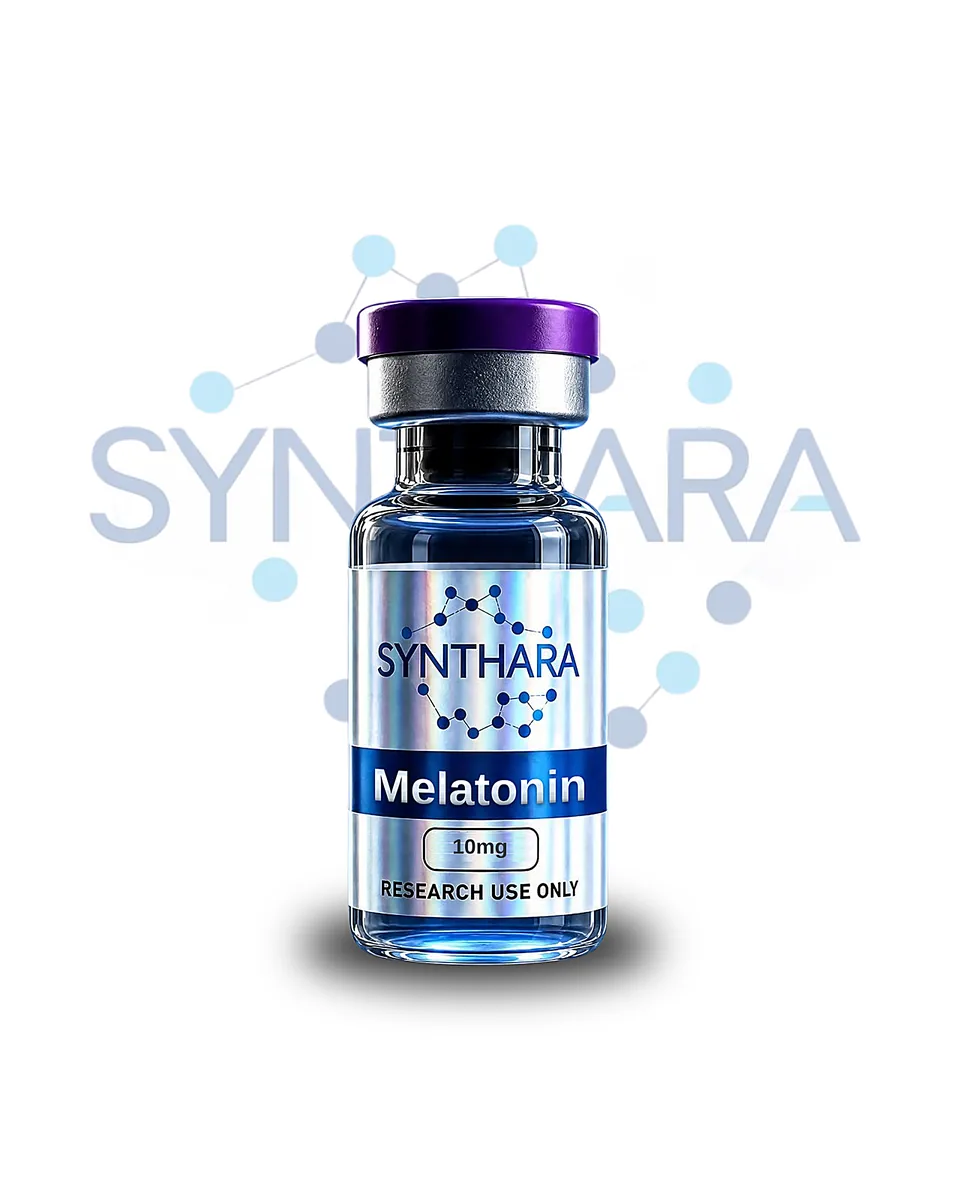


Melatonin
Melatonin is a naturally occurring indoleamine hormone synthesized primarily by the pineal gland from serotonin. Specifically, its secretion is tightly regulated by the suprachiasmatic nucleus (SCN) of the hypothalamus in response to environmental light-dark cycles, functioning as the central hormonal signal of biological darkness.
Mechanistically, research into melatonin has extensively examined its interaction with MT1 and MT2 G-protein-coupled receptors. Because these receptors are distributed across central neural networks and peripheral tissues, their activation mediates chronobiotic effects on both the master circadian clock and peripheral cellular oscillators.
Consequently, studies have investigated its capacity to adjust sleep phase timing, shorten sleep onset latency, and enhance overall sleep architecture, establishing it as a foundational compound in chronobiology and sleep medicine. In addition, research has revealed potent antioxidant properties, demonstrating that melatonin directly scavenges reactive oxygen species (ROS) while upregulating endogenous antioxidant enzyme networks. Furthermore, ongoing studies highlight its immunomodulatory, anti-inflammatory, and potential oncostatic activities across various physiological systems. Overall, its multifaceted signaling pathways and evolutionary conservation make melatonin a critical subject of study in systemic neuroendocrinology and cellular protection.
Be the first to review “Melatonin”
Related products

Uncategorized

Uncategorized
Uncategorized
Uncategorized

Uncategorized

Uncategorized

Uncategorized

Uncategorized
Reviews
There are no reviews yet.