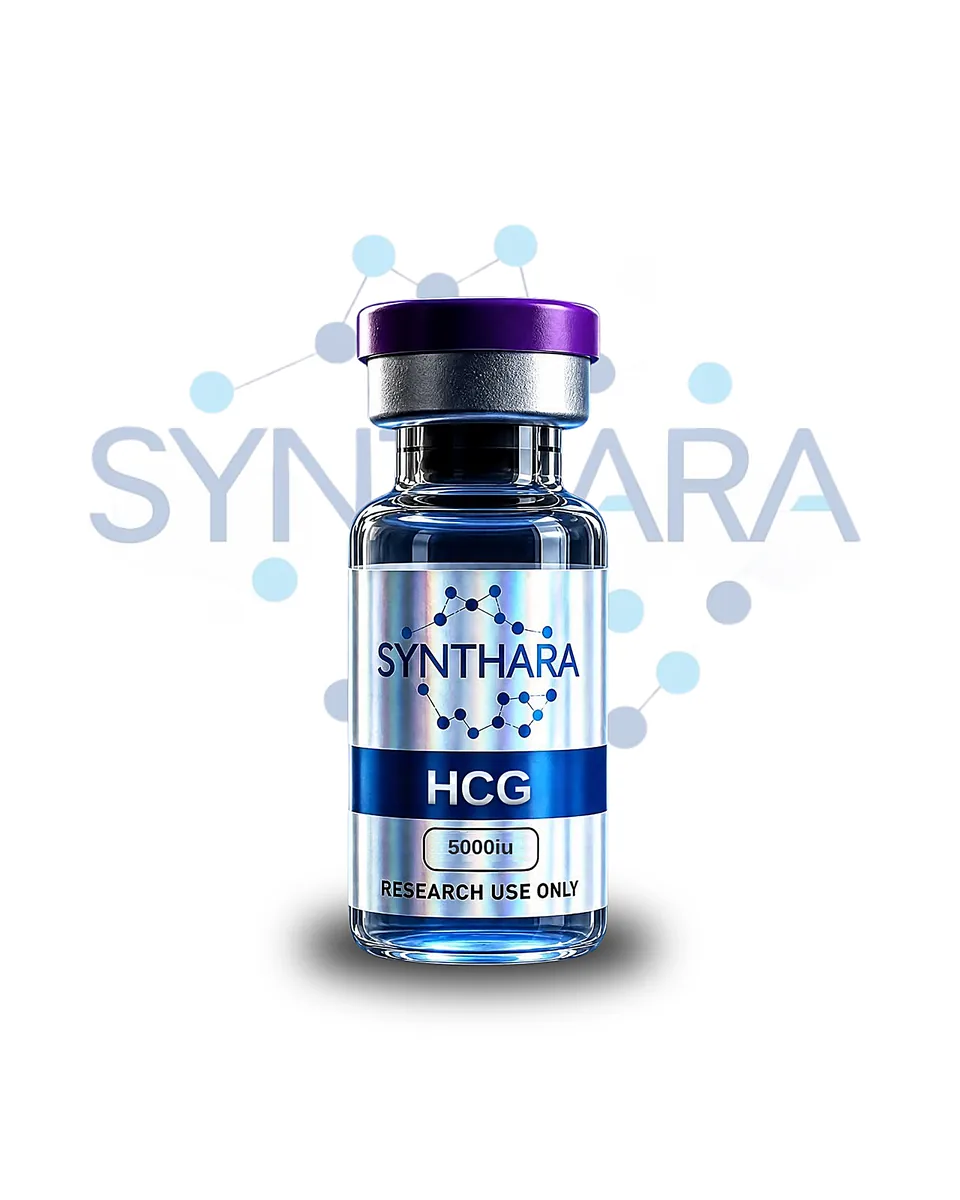
HCG
Human Chorionic Gonadotropin (HCG) is a heterodimeric glycoprotein hormone structurally related to luteinizing hormone (LH). Specifically, it consists of an $\alpha$ subunit shared with other pituitary glycoproteins and a unique $\beta$ subunit that confers its specific biological activity.
Mechanistically, HCG binds to and activates shared LH/h C G receptors ($LHCGR$) in gonadal tissue, effectively mimicking the biological signaling of endogenous LH. Consequently, in male models, research has focused on its capacity to stimulate Leydig cells in the testes, driving endogenous testosterone production and maintaining necessary intratesticular testosterone concentrations for spermatogenesis.
In addition, in female models, studies have examined its essential role in triggering final follicular maturation, inducing ovulation, and supporting corpus luteum function to maintain early progesterone output. Furthermore, researchers frequently utilize HCG as a benchmark compound in fertility treatment protocols to investigate receptor binding kinetics, pharmacokinetic profiles, and downstream steroidogenic cascades. Overall, as a thoroughly characterized and clinically vital glycoprotein hormone, H C G remains an indispensable reference tool in reproductive endocrinology and fertility research.
| Dosage | 10000iu, 5000iu |
|---|
Be the first to review “HCG”
Related products
Uncategorized
Uncategorized
Uncategorized
Uncategorized
Uncategorized
Uncategorized
Uncategorized
Uncategorized
Reviews
There are no reviews yet.