
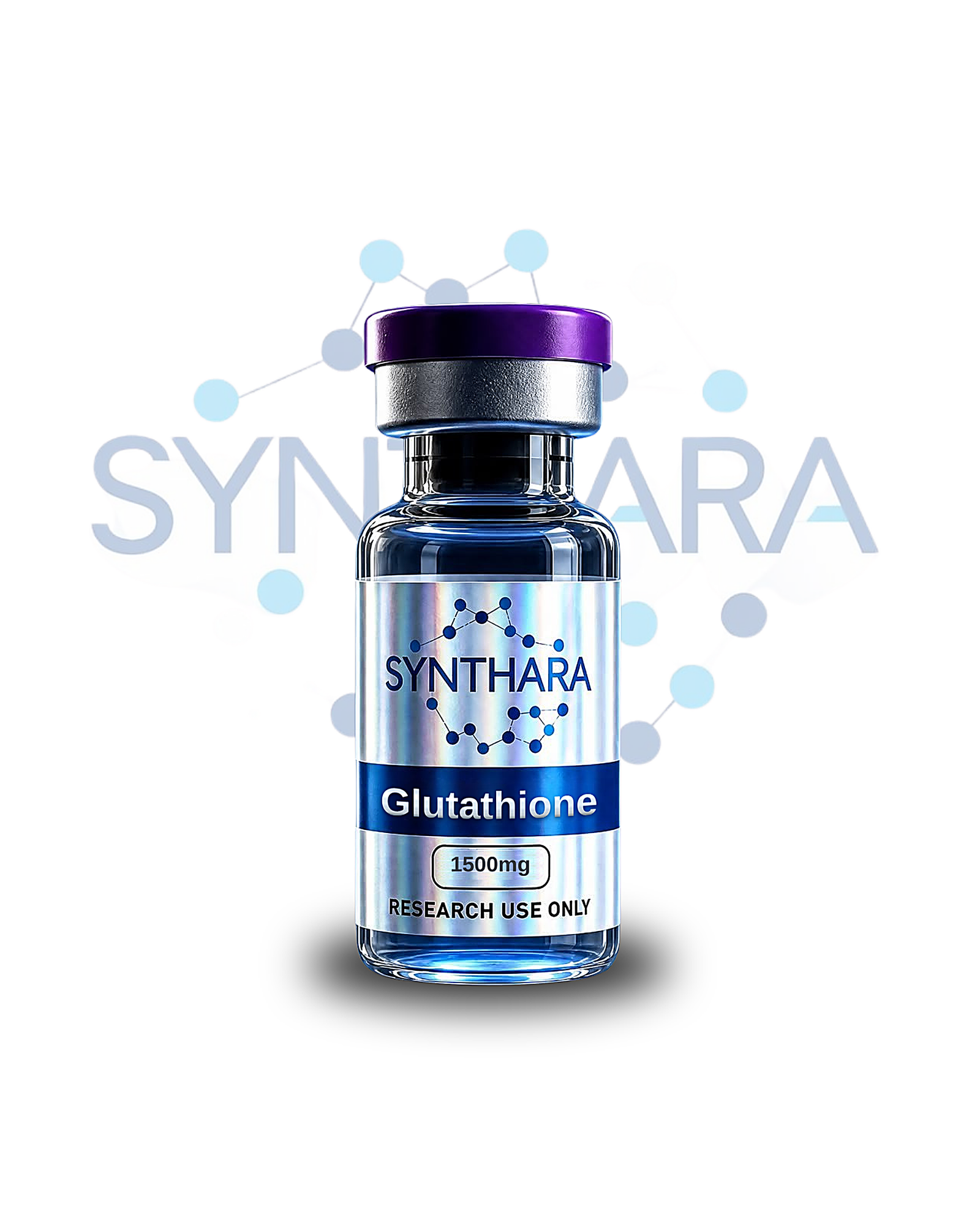
Glutathione is a vital tripeptide composed of glutamate, cysteine, and glycine, synthesized endogenously within virtually all human cells. Specifically, it is widely recognized as the body’s master endogenous antioxidant, serving a fundamental role in maintaining cellular redox homeostasis.
Mechanistically, research has focused on its capacity to directly neutralize reactive oxygen species (ROS) and serve as an essential cofactor for glutathione peroxidase, a primary enzyme protecting cell membranes against lipid peroxidation. Because it undergoes conjugation reactions in Phase II hepatic clearance pathways, glutathione binds xenobiotics, heavy metals, and metabolic by-products to facilitate their water-soluble excretion.
Consequently, researchers have explored its vital influence on lymphocyte proliferation, mitochondrial integrity, and markers of cellular senescence, given the well-documented decline in endogenous glutathione concentrations during chronic oxidative stress and aging. In addition, studies have investigated its specific role in modulating cutaneous pigmentation pathways, focusing on its ability to inhibit tyrosinase activity and shift melanin synthesis toward lighter pheomelanin in dermatological models. Furthermore, maintaining an optimal ratio of reduced (GSH) to oxidized (GSSG) glutathione remains a crucial bio-marker for evaluating tissue resilience against environmental toxins. Overall, as one of the most thoroughly investigated molecules in redox biology, glutathione remains a cornerstone compound in longevity, metabolic detoxification, and oxidative stress research.
Be the first to review “Glutathione”
Related products
Uncategorized
Uncategorized
Uncategorized
Uncategorized
Uncategorized
Uncategorized
Uncategorized
Uncategorized
Reviews
There are no reviews yet.