
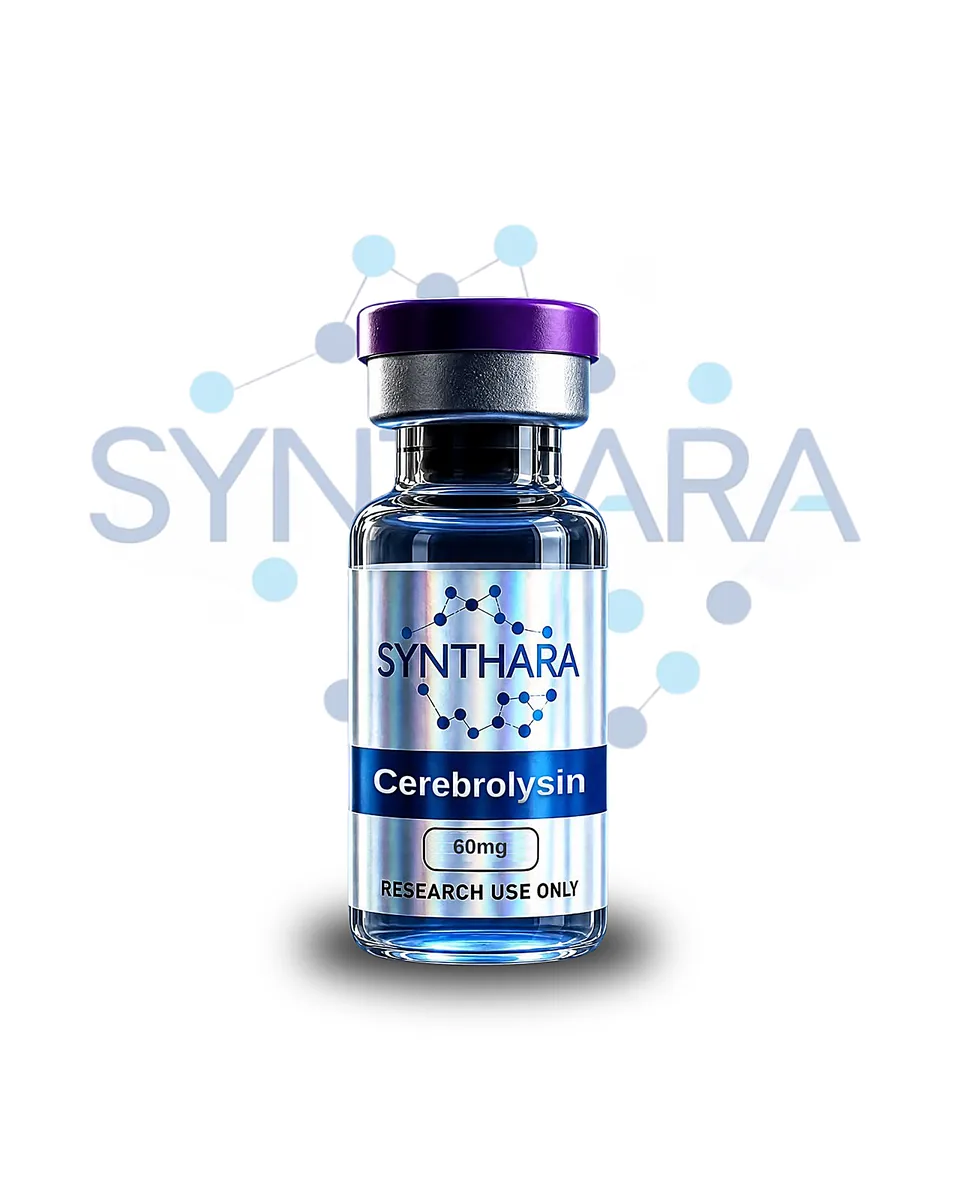
Cerebrolysin
Cerebrolysin is a peptide-based neuroprotective compound derived from purified porcine brain tissue through a controlled enzymatic digestion process, yielding a mixture of low-molecular-weight neuropeptides and free amino acids. Specifically, as a complex neuropeptide preparation, Cerebrolysin has been the subject of extensive preclinical and clinical research into its potential cognitive-enhancing and neuroprotective properties.
Mechanistically, studies have investigated its multimodal mechanism of action, which mimics the effects of endogenous neurotrophins such as brain-derived neurotrophic factor (BDNF) and nerve growth factor (NGF). Because these active neuropeptides are sufficiently small to cross the blood-brain barrier, they directly target central neural networks.
Consequently, research indicates that Cerebrolysin promotes neuronal survival, supports synaptic plasticity, enhances cholinergic and dopaminergic neurotransmission, and attenuates markers of neuroinflammation and oxidative stress in neural tissue. In addition, investigators have examined its therapeutic potential in models of neurodegenerative conditions—including Alzheimer’s disease and vascular dementia—as well as acute neurological recovery models like stroke and traumatic brain injury. Furthermore, its multi-target activity profile enables simultaneous neuroprotective and neuroregenerative signaling pathways. Overall, its complex, multi-component nature and broad neurotrophic-like activity profile make Cerebrolysin a uniquely valuable compound within neurobiology and cognitive research.
Be the first to review “Cerebrolysin”
Related products

Uncategorized

Uncategorized
Uncategorized
Uncategorized

Uncategorized

Uncategorized
Uncategorized
Uncategorized
Reviews
There are no reviews yet.