
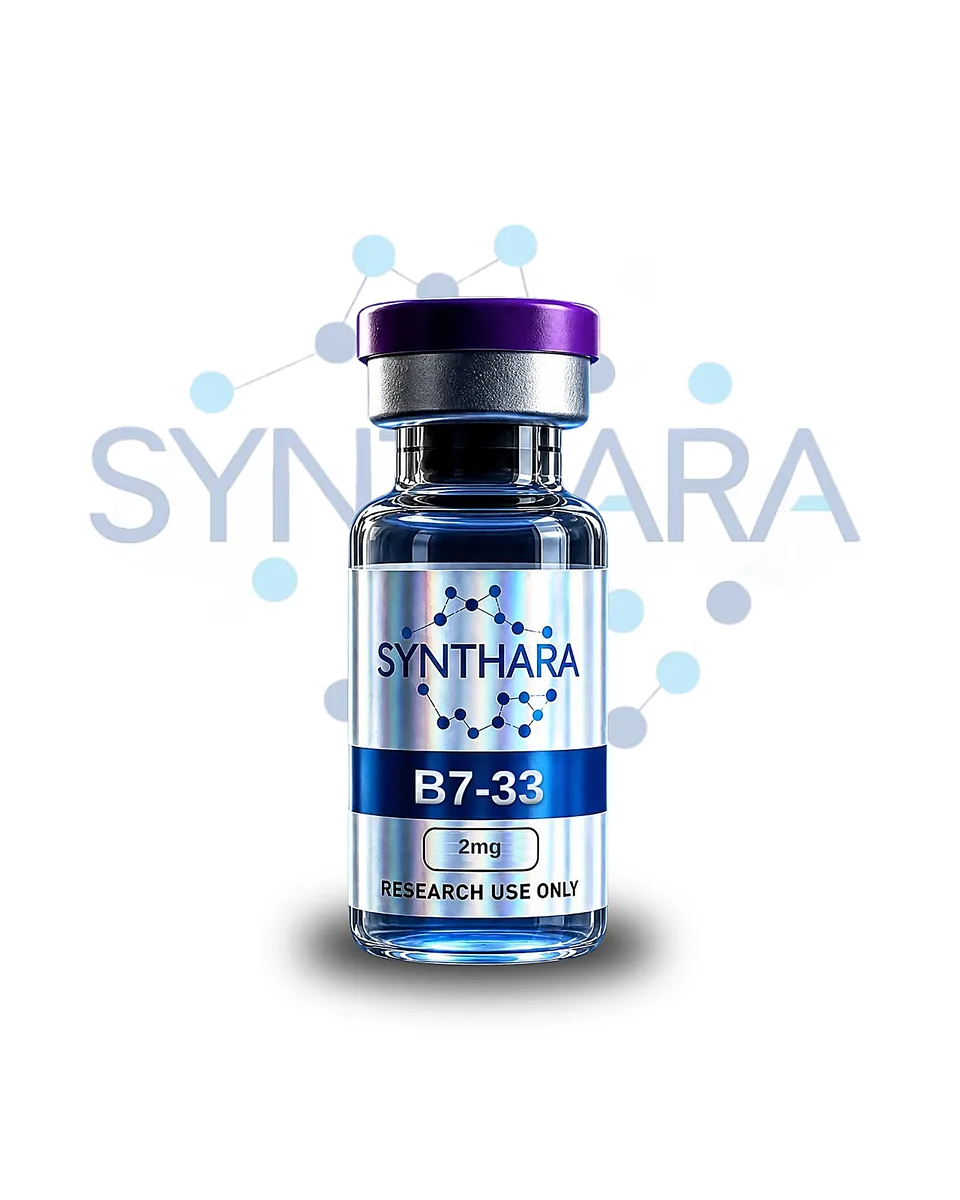
B7-33
B7-33 is a synthetic single-chain peptide analogue derived from the H2 relaxin hormone. Specifically, it was engineered to selectively activate the RXFP1 (Relaxin Family Peptide Receptor 1) without triggering the cAMP signaling pathway, directing its activity through the ERK1/2 and nNOS-NO-cGMP pathway instead.
Mechanistically, research into B7-33 focuses primarily on its potent anti-fibrotic properties. Because relaxin signaling via RXFP1 regulates the dynamic balance between collagen deposition and degradation, B7-33 is of significant interest in the study of organ fibrosis. Specifically, studies have shown that it inhibits the differentiation of fibroblasts into pro-fibrotic myofibroblasts, reduces collagen synthesis, and elevates matrix metalloproteinase activity to facilitate extracellular matrix remodeling.
In addition, researchers have investigated its potential cardioprotective effects following ischemic injury. Consequently, studies indicate it can attenuate adverse cardiac remodeling, reduce myocardial fibrosis, and preserve left ventricular function. Furthermore, it exhibits notable vasodilatory and anti-inflammatory properties that align with the broader cardiovascular benefits of the relaxin family. Overall, serves as a vital research tool for advancing scientists’ understanding of relaxin receptor pharmacology and cardiovascular protection.
Be the first to review “B7-33”
Related products

Uncategorized

Uncategorized

Uncategorized

Uncategorized

Uncategorized
Uncategorized

Uncategorized

Uncategorized
Reviews
There are no reviews yet.