
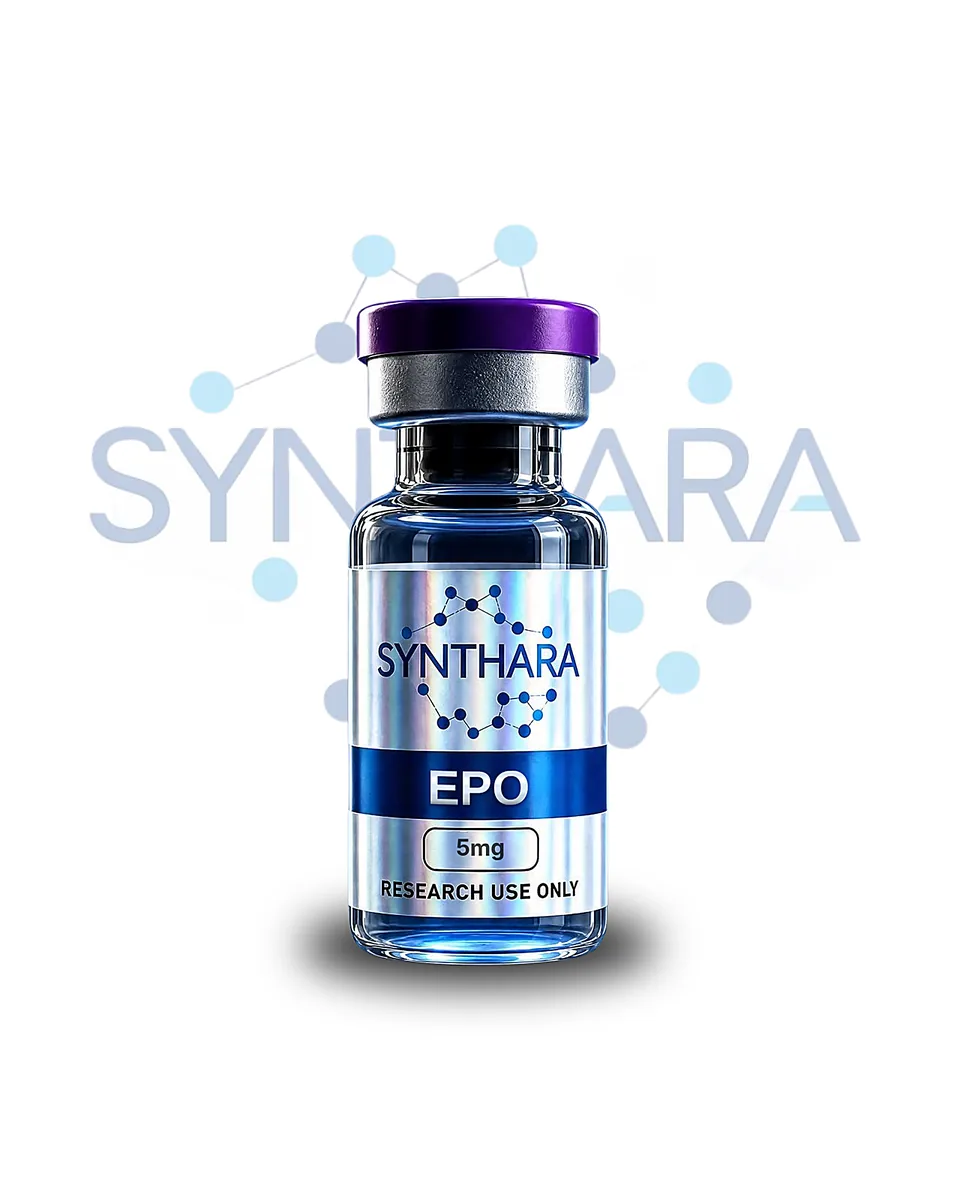


EPO
Erythropoietin (EPO) is a naturally occurring glycoprotein hormone predominantly synthesized by the kidneys in response to hypoxic conditions. Specifically, it serves as the primary physiological signal driving red blood cell (erythrocyte) production within the bone marrow. erythropoietin
Mechanistically, recombinant human EPO used in research binds directly to erythropoietin receptors on erythroid progenitor cells, stimulating their proliferation, differentiation, and survival. Consequently, extensive research has investigated EPO’s role in erythropoiesis regulation, examining how it modulates hematocrit and hemoglobin concentrations to expand total systemic oxygen-carrying capacity. erythropoietin
Beyond hematopoietic effects, studies have revealed significant cytoprotective and neuroprotective properties associated with EPO signaling. In addition, evidence indicates that EPO can reduce cell death in ischemic injury models of the brain, heart, and retina through anti-apoptotic pathways. Furthermore, the widespread expression of EPO receptors across diverse non-hematopoietic tissues suggests essential physiological roles far beyond red blood cell production. Overall, its central position in oxygen transport dynamics and tissue preservation makes EPO a crucial focus across hematology, sports physiology, and regenerative medicine.
Be the first to review “EPO”
Related products
Uncategorized
Uncategorized

Uncategorized
Uncategorized

Uncategorized
Uncategorized

Uncategorized

Uncategorized
Reviews
There are no reviews yet.